
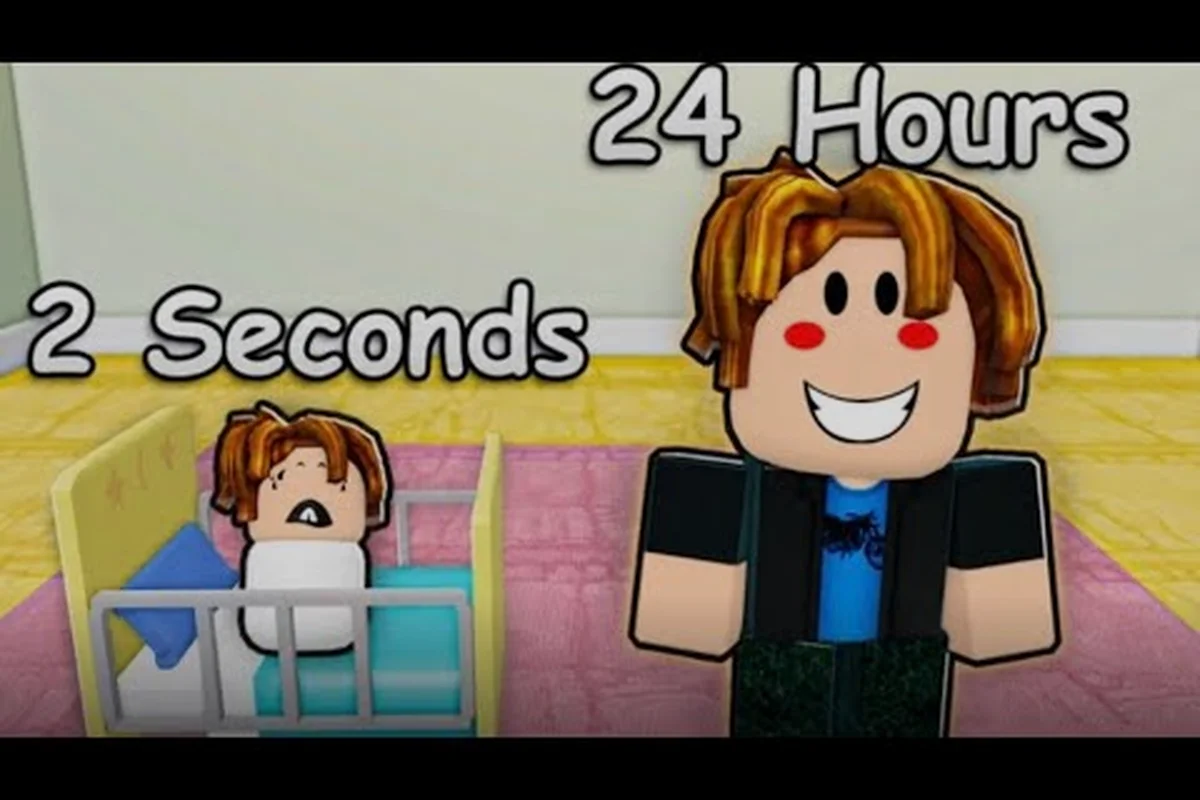
Raise The Biggest Family group fun comes alive when 18 players divide into families, assign roles, and turn ordinary care tasks into shared stories. These scenarios show how friends can build teamwork, humor, and memorable roleplay without making the session feel crowded.
Raise The Biggest Family Group Fun Starts With Roles
The strongest Raise The Biggest Family group fun begins before anyone starts caring for a character. An 18-player server works best when everyone understands the household structure, the shared objective, and the amount of attention that each role receives. Without a loose plan, conversation becomes repetitive and players may crowd the same household activities.
Divide the group into three groups of six, then give each group a distinct family identity. A six-player household might include two caregivers, two children, one elder, and one visitor with a job outside the home. That format is manageable because every player has a recognizable purpose while the group still has room for spontaneous interaction.
| Role | Main group function | Simple objective | Best comic conflict |
|---|---|---|---|
| Caregiver | Plans meals and routines | Keep everyone fed | A recipe changes every time it is checked |
| Child | Explores and causes light chaos | Complete a shared task | The wrong object becomes the prize |
| Elder | Gives advice and records events | Preserve the family story | Misplaced keys trigger an investigation |
| Helper | Supports chores and errands | Deliver three items | A detour creates an unexpected detour |
| Visitor | Connects households | Share news or an item | A rumor spreads faster than the truth |
| Narrator | Tracks goals and plot points | End with one family memory | Everyone disagrees about what happened |
Assigning these roles creates 18-player coordination without requiring strict roles. Players can still swap jobs, care for unexpected characters, or abandon a storyline when a better joke emerges. The point is to give everyone an entry point, not to build a rigid hierarchy that makes casual play feel like a chore.
For additional group arrangements, the Raise The Biggest Family Roblox roleplay guide offers ideas for organizing characters and building a playful household dynamic. For example, rotate the caregiver, helper, visitor, and narrator roles among the three six-player groups while keeping child and elder characters stable. This lets each household test a different routine without losing continuity: one group might struggle with meal planning, another with childcare, and a third with errands, creating distinct story prompts for the 18-player server.
Set a Shared Family Goal
Each six-player household should finish with one simple goal. Good options include preparing a shared meal, caring for every family member, collecting household supplies, or completing a playful checklist. A shared goal matters because it gives the group a reason to communicate without requiring complicated competition.
| Goal type | Approximate duration | Player responsibility | Best outcome |
|---|---|---|---|
| Household care round | 10–15 minutes | Divide chores among six players | Everyone contributes one care action |
| Story delivery | 15–20 minutes | Pass one object through the family | The object changes hands with context |
| Neighborhood challenge | 20 minutes | Pair with another household | Both families cooperate |
| Comedy mishap | 5–10 minutes | Create one harmless problem | A prop or rumor drives the scene |
| Memory session | 10 minutes | Share one event from the family | Players invent a shared history |
Use a timer only as a loose reference because objectives in a family simulator can expand unexpectedly. A simple meal may become a treasure hunt for ingredients, while a supply run may produce a neighborhood disagreement. This organic escalation is what makes Raise The Biggest Family family simulator roleplay feel more interesting than completing identical tasks alone.
Keep the Session Moving
A group can lose momentum when everyone waits for one player or tries to follow the same character. Encourage parallel activities instead. While one caregiver prepares food, another player can entertain a child, gather supplies, or begin a minor family dispute. The action remains connected without requiring everyone to stand in the same place.
Useful facilitation phrases include “What does the rest of the household need?” and “Who wants to help with this problem?” They encourage cooperation without dictating a solution. Players can also assign a temporary story captain whose job is to remind the group of the shared goal and notice when someone has not joined the activity yet.
Players Who Contribute Enrich the Story
The Raise The Biggest Family roleplay community gains energy when players contribute rather than compete for attention. Public servers often contain very different levels of experience, so a group should establish three boundaries: no mocking beginners, no forced interruption of another person’s scene, and no escalating practical jokes beyond what the players clearly enjoy.
The official NovKod X Level0Expert Roblox group is the community hub associated with the game and is a useful place to verify announcements. The supplied community snapshot showed approximately 596,000 members in late October 2026, although membership counts naturally change. Announcements should be checked there before players assume a temporary event or server rule is permanent.
| Community habit | What it prevents | Simple replacement rule |
|---|---|---|
| Quick introductions | Silent characters joining late | Share name, role, and one goal |
| Scene check-ins | Accidental interruptions | Ask whether the area is occupied |
| Flexible objectives | One player carrying every task | Divide work into pairs |
| Light property boundaries | Property confusion | Ask before moving or using items |
| Shared ending | Unfinished family story | Record one result before leaving |
A good roleplay community is not defined by how loudly players perform. It is defined by how quickly newcomers understand the activity and how naturally they can contribute. The same principle applies to Raise The Biggest Family chat with players: brief, welcoming messages are more useful than constant promotion or unrelated conversation.
Use the Chat to Coordinate, Not Overexplain
In-game chat works best for short coordination. Share where supplies are located, announce a household goal, and ask for a partner when a task requires two people. Longer character dialogue can happen in person, where actions and proximity make the scene easier to read.
Avoid turning chat into a wall of instructions. If six people are working in a household, one message should usually communicate one change. Players can also use emoji reactions for quick agreement when available, then clarify detailed actions in person. This keeps Raise The Biggest Family group fun flowing without turning every tiny decision into a meeting.
Players who enjoy making friends can use the Raise The Biggest Family roleplay guide as a starting point for building a family group roleplay Roblox crew. A good invitation explains the player’s current family simulator role, suggests a shared household goal, and names one activity the group can try together, such as cooking, cleaning, or caring for a child. Agreeing on boundaries before joining a roleplay community helps the raise the biggest family group fun because shy or new players know when to contribute, while confident players can turn ideas into playful scenes instead of overruling everyone. Clear expectations also make funny roleplay ideas easier to develop, since each character can have a distinct personality and role within the same family home.
Handle Newcomers Gracefully
Reserve one or two group roles for flexible newcomers. A beginner can join as a visiting relative, help gather items, or react to the current family problem. This approach gives them an immediate role while allowing more experienced players to model the intended pace.
When someone joins, avoid demanding a biography. Ask two simple questions: what kind of character they want and whether they prefer helping, exploring, or telling jokes. Those answers reveal enough to include them. A shared introduction round also helps, with each player naming their role and one unusual family trait.
Raise The Biggest Family Family Roleplay Roblox Uses Shared Challenges
Raise The Biggest Family family roleplay Roblox sessions become memorable when the group faces a manageable problem with multiple solutions. A missing item, limited preparation window, or divided household creates enough tension for humor without making the experience feel competitive. The objective should take roughly ten minutes, not turn every meeting into a formal competition.
Run a Three-Role Supply Mission
Choose three items and assign one item to each of three two-player teams. Teams need to collect their supplies, return to the household, and explain what happened. The explanation is important because it creates a story even if the gameplay itself is brief.
| Mission phase | Time target | Action | Role-play purpose |
|---|---|---|---|
| Briefing | 1 minute | Reveal three needed items | Establish the shared problem |
| Collection | 5–8 minutes | Teams fetch assigned supplies | Encourage movement and teamwork |
| Complication | 1 minute | Introduce one harmless twist | Create a shared memory |
| Return | 2 minutes | Deliver items to the household | Build a family reunion scene |
| Debrief | 2 minutes | Summarize the result | Give the story a clear ending |
Possible complications include swapped labels, a moving target location, or a teammate insisting that the simplest solution is wrong. Players should keep the conflict fictional and reversible. The goal is comedy through coordination, not griefing or deliberately wasting another person’s time.
Create a Family Council
A family council turns the group into a temporary decision-making body. The household faces one issue, such as choosing tonight’s activity or deciding how to divide supplies. Each player may make a brief case for an option, then the group votes.
Keep voting three-option maximum. Too many choices create dead time, while two options can feel limited. Give each player one dramatic condition, such as “the eldest gets first choice” or “the person who completed the most chores breaks the tie.” These conditions add characterization without punishing anyone for a normal in-game action.
| Council stage | Group action | Role-play outcome |
|---|---|---|
| Problem | State one household issue | Establishes shared stakes |
| Options | Reveal up to three choices | Creates differences of opinion |
| Debate | Give every pair one argument | Encourages character voice |
| Vote | Select a family decision | Produces visible group ownership |
| Ritual | Celebrate or reject the result | Closes the scene with humor |
Mix Care With Comedy
Caregiving tasks provide the structure, while comedy provides the memorable moments in a Raise The Biggest Family roleplay. Draw humor from character assumptions, time pressure, exaggerated descriptions, and harmless misunderstandings—such as confidently substituting the wrong ingredient—because these moments can happen naturally alongside a family’s routine. Keep the joke attached to the scene rather than a player’s actual personality, family situation, or skill level, so the group stays comfortable and the roleplay remains playful.
Examples of safe jokes include a child hiding a single spoon, a helper confidently bringing the wrong ingredient, or an elder narrating an event with conflicting details. The repeated spoon, wrong ingredient, and competing narrator become reusable comedy props. Reusing a joke inside the same session makes it feel like an inside reference instead of random noise.
The collection of Raise The Biggest Family funny roleplay ideas provides more variations when a group needs a fresh prompt or story direction. In a Raise The Biggest Family family simulator roleplay, players can combine familiar family chores with exaggerated misunderstandings—for example, turning a missing spoon into a case that several characters “know” they hid. The wrong ingredient, repeated spoon, and competing narrator can become recurring comedy props, while family chat with players keeps the group’s reactions collaborative rather than disconnected.
Raise The Biggest Family Funny Roleplay Ideas for 18 Players
Raise The Biggest Family funny roleplay ideas work best when each joke creates a shared moment rather than pulling attention from the rest of the group. An 18-player server can support three story lines at once, but those lines should occasionally intersect so the session does not feel like separate private games.
Use a three-act structure. Act one introduces the problem, act two allows competing solutions to collide, and act three resolves the issue with a family custom. Dividing the session this way prevents long periods of setup and gives every participant a natural place in the story.
Three Households, One Delivery
Give each household one part of a large delivery. They must carry their items to a meeting place without opening the packages. The twist is that each family has interpreted the destination differently. One family expects a picnic, another expects a party, and the third expects a formal meeting.
The comedy comes from conflicting plans, not player-versus-player interference. Each household can assign roles such as navigator, package carrier, clue keeper, or negotiator, allowing players to trade clues, combine deliveries, and redirect one another toward a final surprise. For example, the picnic family can intentionally label a bakery box “party supplies,” while the formal-meeting family treats the same clues as seating instructions. A 20-minute version works well because each household needs only three clear steps—choose an objective, collect one clue, and make one shared delivery—keeping the roleplay focused, readable, and easy to escalate.
The Misplaced Family Trophy
One family creates an important-looking trophy and hides it as part of the activity. The other families receive clues, but the clues are intentionally vague. Players should search through normal locations, question characters, and create theories about the trophy’s disappearance.
Keep the trophy visible and easy to recover. The fun lies in the search and the theories, not in hiding an important item beyond reasonable notice. End with a ceremonial return and let players decide whether the trophy belonged to the family that found it or the family that lost it.
Family Talent Show
Assign each household one act from the talent categories: a dance, recital, magic trick, imaginary sport, dramatic speech, poster, or machine demonstration. Because each group’s format centers on collaboration, members should divide preparation into roles such as performer, choreographer, prop handler, narrator, or comic improviser. For example, a six-player musical group can assign one player to lead the ensemble and another to deliberately miss the rhythm for a comedy beat, while the rest keep the performance together. Keep preparation brief, then present the act without interrupting another household’s performance.
| Talent category | Six-player format | Comedy opportunity |
|---|---|---|
| Musical | Small ensemble performance | One player misses the rhythm |
| Athletic | Invented household game | Rules change during the match |
| Dramatic | Family reenactment | Every member remembers it differently |
| Visual | Group poster or display | Characters dispute the subject |
| Inventive | Demonstration of a machine | The machine solves the wrong problem |
The talent-show finale gives the session a natural conclusion and lets each household showcase its personality. Players can vote for a playful award such as “Most Dramatic Family” or “Best Unexpected Prop,” provided the categories are decided before the performances begin.
Alternate Between Challenge and Calm
Not every minute needs a joke or race. After two energetic scenarios, schedule a short calm activity such as a family meal, bedroom conversation, or neighborhood visit. This creates contrast and gives the group time to develop character relationships. The calmer moments also make the next burst of comedy feel stronger.
A practical pattern is 30 minutes of active play, 10 minutes of conversation, and another 20 minutes of group activity. This does not require a strict schedule, but it prevents an 18-player session from becoming exhausting. Players who want additional pacing ideas can consult the server-size guide for Raise The Biggest Family.
Raise The Biggest Family Chat With Players Needs Clear Etiquette
Raise The Biggest Family chat with players can make a crowded server feel welcoming, but only when communication stays connected to the activity. The group should use chat to coordinate households, introduce new players, and resolve uncertainty. Unrelated promotion, constant teasing, and repeated commands interrupt the shared story.
The easiest approach is to appoint one chat moderator for each six-player household. This person does not control the plot; they simply summarize decisions and make sure quiet players are included. Rotate the duty every ten minutes so one player does not dominate the server.
Use a Quick Communication System
Assign simple labels that work even if players are spread across the map. For example, “blue,” “red,” and “yellow” can identify households, while “ready,” “help,” and “wait” can describe immediate needs. Players can then communicate in short messages rather than spelling out long instructions.
| Message type | Example | When it helps |
|---|---|---|
| Location | “Supplies are near the blue house.” | Someone needs directions |
| Request | “Two players needed for delivery.” | A task needs a partner |
| Status | “Meal is ready.” | The household changes activity |
| Inclusion | “Come meet the new family.” | A newcomer needs a role |
| Boundary | “Pause that scene, we are filming.” | Players protect a role-play moment |
Chat labels are especially useful for remote households that cannot easily communicate in person. In Raise The Biggest Family, a player can use a location label such as “blue” to guide a family member toward a specific house, while a status label like “meal” signals a change in the household routine without interrupting role-play. This shared shorthand keeps the family roleplay moving, reduces repetitive questions in the game’s text chat, and gives remote players a faster way to coordinate household tasks.
Keep Jokes Inclusive and Playable
A good in-game joke should survive being explained to someone who just joined. Avoid references that depend on private conversations or hidden instructions. The strongest humor comes from visible game actions, clear character roles, and small mistakes that everyone can recognize.
Ask whether the joke changes the shared story. If it does not, it may still be pleasant, but it should not consume the session. A useful filter is the three-use rule: if the same joke stops producing a response after three attempts, move on to a new activity. This keeps the energy responsive instead of forcing one gag to carry the entire gathering.
End With a Shared Memory
Before leaving, give every household one final moment. Players can select a family tradition, announce an unusual achievement, or agree on what happened during the session. The organizer then writes a brief recap in chat with the group’s agreed objective and a memorable outcome.
This creates a collective ending even when players came from different friend groups. It also gives future sessions a foundation: the household can refer to an earlier victory, argument, talent show, or improvised rescue. The closing moment takes only five minutes but makes the group experience feel more unified.
Group Setup Checklist for a Memorable Session
A dependable setup covers communication, roles, objectives, and boundaries before the first activity begins. Use this checklist to confirm that everyone has enough direction to contribute. The aim is not to over-plan every moment, because unscripted interactions are what make the group memorable.
| Preparation item | Complete when... | Owner |
|---|---|---|
| Household split | Six players belong to each family | Organizer |
| Role briefing | Every player knows one responsibility | Each household |
| Shared objective | One clear outcome is selected | Organizer |
| Joke boundary | Harmless humor is agreed upon | Chat moderator |
| Communication plan | Players know how to request help | Chat moderator |
| Ending activity | A five-minute conclusion is scheduled | Organizer |
Review the checklist before gathering everyone in one place. If the server is busy, begin with small introductions and distribute roles after players enter. A two-minute setup can prevent a ten-minute opening confusion, and a brief recap when someone arrives late keeps that player from feeling excluded.
The community and developer side of the game may also shape what is available for group activities. The Raise The Biggest Family group and developer guide covers community updates and group information, which can help organizers distinguish current features from older community routines.
Frequently Asked Questions
How can 18 players enjoy Raise The Biggest Family without crowding?
Divide the players into three households of six and give each group a separate objective. Assign roles such as caregiver, helper, child, elder, visitor, and narrator, then reconnect the households through a delivery, meeting, or neighborhood challenge. Parallel activities keep the server lively without forcing every player into the same location.
What is the best way to start a family roleplay session?
Begin with a one-minute introduction in which each player states their character name, role, and preferred activity. Choose a shared goal that can finish in ten to twenty minutes, such as collecting supplies or preparing a meal. Clear roles and a visible objective give new players an immediate way to contribute.
How do you keep funny roleplay from interrupting other players?
Use jokes that involve characters, props, and fictional misunderstandings rather than personal traits. Before starting a loud scene, check whether nearby players are already engaged. If several story lines compete for attention, connect them through a shared problem instead of asking everyone to stop what they are doing.
Do players need to chat constantly during group activities?
No. Short chat messages should handle directions, status updates, requests for help, and introductions. The main action can happen through in-game interactions and visible role-play, while chat supports the parts that are difficult to communicate at a distance. A household chat moderator can summarize important decisions without dominating the conversation.
What makes a family simulator session feel complete?
End with a shared memory, such as announcing the family’s chosen activity, celebrating a completed task, or recording the group’s most memorable mishap. A brief recap in chat gives the session continuity and provides material for future stories. This closing ritual matters because it turns separate activities into one shared family experience.